


Your car’s crumbs have unionized, the sand moved in last summer, and that “portable” vacuum wheezes like it’s running on hopes and prayers—so you’re wondering how much motor power you actually need to win the war on dirt.
By understanding wattage, suction, and airflow, you can pick a car vacuum that actually cleans, not just makes noise—studies on vacuum performance back this up Consumer Reports.
✅ Understanding Motor Power Ratings: Watts, Air Watts, and Suction Strength
Motor power ratings help you judge how strong a car vacuum really is. Focus on watts, air watts, and suction strength, not just big marketing numbers.
Clear power data lets you compare different models, avoid weak suction, and choose a vacuum that matches your car cleaning habits and budget.
1. Watts: Electrical Power Input
Watts show how much electrical power the motor uses. Higher watts often mean stronger suction, but design efficiency also matters a lot.
- Low: 80–120 W – light dust, quick cleanups
- Medium: 120–250 W – regular car use
- High: 250–400 W – deeper, faster cleaning
2. Air Watts: Real Cleaning Performance
Air watts measure how well the vacuum turns power into airflow and suction. This value reflects real-world cleaning strength on seats and carpets.
| Air Watts | Best For |
|---|---|
| 20–40 AW | Light dust, dashboards |
| 40–70 AW | Daily car cleaning |
| 70+ AW | Pet hair, sand, heavy dirt |
3. Suction Metrics: kPa and mbar
Suction pressure, often in kPa or mbar, shows how strongly the vacuum lifts dirt. Higher numbers mean better pickup from gaps and fabric fibers.
- 6–8 kPa: basic dust and crumbs
- 8–12 kPa: typical car cleaning
- 12+ kPa: stubborn debris, pet hair
4. How Much Motor Power Is Enough?
For most drivers, a 120–200 W motor with solid airflow is enough. Frequent users, pet owners, or rideshare drivers may want higher power levels.
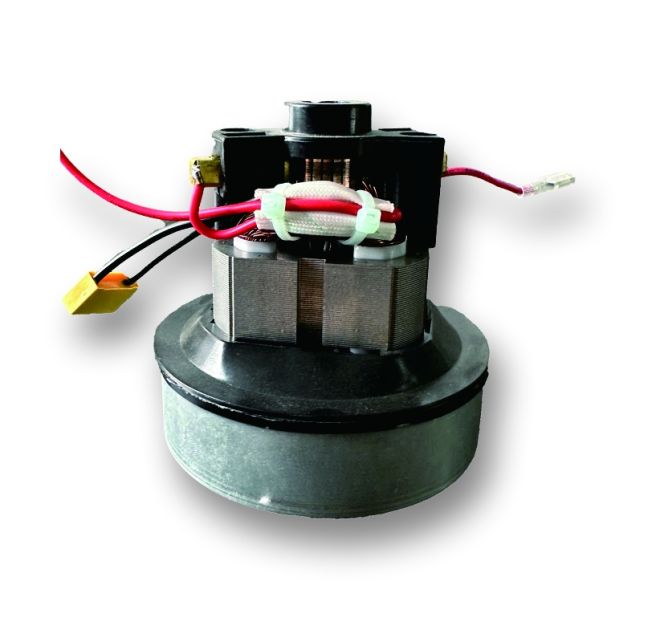
For professional or multi-car use, consider a stronger unit or a HANLANG Universal Vacuum Cleaner Motor | Commercial Use to handle longer run times and heavier dirt loads.
🚗 Matching Motor Power to Different Car Interior Cleaning Scenarios
Each part of your car interior needs different suction strength. Picking the right motor power makes cleaning faster, easier, and more energy efficient.
Match power to task: light dust needs less, while sand, pet hair, and work vehicles need higher watts and stronger suction.
1. Daily Dust and Crumbs
For light, daily cleaning, you do not need a huge motor. Focus on compact size and easy handling for quick touch-ups.
- Recommended motor: 80–150 W
- Ideal for: dashboards, seats, cup holders
- Benefits: quiet, light, longer battery life
2. Family Cars and Kids’ Mess
Family cars see snacks, dust, and dirt often. You need more power for faster pickup and to keep fabric and floor mats clean.
| Use Level | Suggested Power |
|---|---|
| Weekly cleaning | 120–180 W |
| Heavy kid use | 180–220 W |
3. Pet Hair and Sand-Heavy Areas
Pet hair clings strongly to seats and carpets, and beach or off-road sand sinks deep. Choose higher power for strong, steady suction.
- Recommended motor: 200–300 W
- Look for: high air watts, turbo brushes
- Best for: pet owners, coastal or dusty regions
4. Ride-Hailing, Taxi, and Work Vehicles
Commercial and work vehicles need durable motors that handle long, frequent use without overheating or losing suction over time.
| Scenario | Motor Power | Key Need |
|---|---|---|
| Rideshare/taxi | 200–300 W | Quick deep cleaning |
| Service vans | 250–350 W | Heavy dirt removal |
🌀 How Motor Power Affects Noise, Heat, and Durability
More motor power improves suction but can raise noise and heat. Good engineering balances strength with comfort and long-term reliability.
Understanding this balance helps you select a car vacuum that cleans well, lasts longer, and stays comfortable to use in tight car cabins.
1. Noise Levels in Small Car Cabins
High-power motors can be loud inside a car. Smart fans, sound insulation, and smooth bearings help keep noise at a comfortable level.
- Acceptable range: 70–80 dB for car use
- Check for noise control design features
2. Heat Build-Up and Safety
As power climbs, the motor produces more heat. Quality vacuums use better materials, vents, and protection circuits to prevent damage.
| Feature | Benefit |
|---|---|
| Thermal protection | Prevents burn-out |
| Metal housings | Better heat transfer |
3. Durability Over Time
Durable motors run strong for years. Balanced power, quality bearings, and steady cooling protect the motor from early wear and failures.
- Look for tested life hours
- Prefer brands with strict quality control
🔋 Balance Between Motor Power and Battery Life in Cordless Models
Cordless car vacuums must balance strong suction with long run time. Smarter motors and batteries help avoid constant recharging.
Choose setups that match your cleaning style so you get enough power without losing convenience and portability.
1. Runtime vs. Suction Modes
Most cordless models offer eco, normal, and max modes. Use lower modes for daily dust and boost power only for stubborn dirt.
| Mode | Typical Runtime |
|---|---|
| Eco | 25–40 minutes |
| Normal | 15–25 minutes |
| Max | 8–12 minutes |
2. Battery Capacity and Charging
A larger battery supports higher motor power but adds weight. Fast charging and removable packs make cordless use more flexible.
- Common size: 2,000–4,000 mAh
- Fast charge: about 2–3 hours
3. Smart Controllers and Efficiency
Modern controllers adjust power based on load. They cut waste, extend runtime, and protect both battery and motor from stress.
- Soft start reduces sudden current spikes
- Over-discharge protection saves battery life
🏅 Why Hanlang Technology’s Motor Design Meets Everyday Car Cleaning Needs
Hanlang focuses on efficient, compact motors that give strong suction without excess noise or heat, ideal for daily and commercial car cleaning.
By tuning speed, airflow, and cooling, Hanlang motors deliver reliable power for different car interior conditions and duty cycles.
1. Optimized Power-to-Size Ratio
Hanlang designs motors to fit tight spaces while keeping strong suction. This suits handheld, cordless, and in-car vacuum layouts very well.
| Feature | Advantage |
|---|---|
| Compact body | Easy integration into small vacuums |
| High torque | Stable suction under load |
2. Reliability for Daily and Commercial Use
Strict material choice and testing improve motor life. This supports fleet cleaners, detailing shops, and frequent personal users.
- Stable performance across long run times
- Lower risk of overheating or early failure
3. Support for OEM Customization
Hanlang works with vacuum brands to tune voltage, power, and size. This ensures motors match target suction, noise, and cost goals.
- Custom shafts and mounting options
- Flexible power ratings for different markets
Conclusion
For car vacuums, motor power is important, but it is only part of the story. You must also consider suction, airflow, noise, and battery life.
Choose a unit with power tailored to your car use, not just the biggest watt number. Well-designed motors clean better and last longer.
Frequently Asked Questions about car vacuum cleaner motor
1. Is a higher-watt motor always better for car vacuums?
No. Very high wattage can waste energy, add noise, and shorten battery life. It is better to balance watts with airflow and efficiency.
2. How many watts do I need for basic car cleaning?
For regular dust and crumbs, a 120–180 W motor is often enough. Focus on smart design, good filters, and useful tools for best results.
3. Are cordless car vacuum motors weaker than corded ones?
Not always. Modern cordless motors can be very strong, but runtime is limited. Many users clean daily on low power and use boost only when needed.
4. What affects motor life in a car vacuum?
Heat, dust, and overload are key factors. Good cooling, sealed bearings, and quality control help the motor run longer and more reliably.
5. How can I tell if a motor is efficient?
Check air watts or suction numbers, not only watts. If a vacuum has moderate watts but strong suction ratings, the motor design is likely efficient.